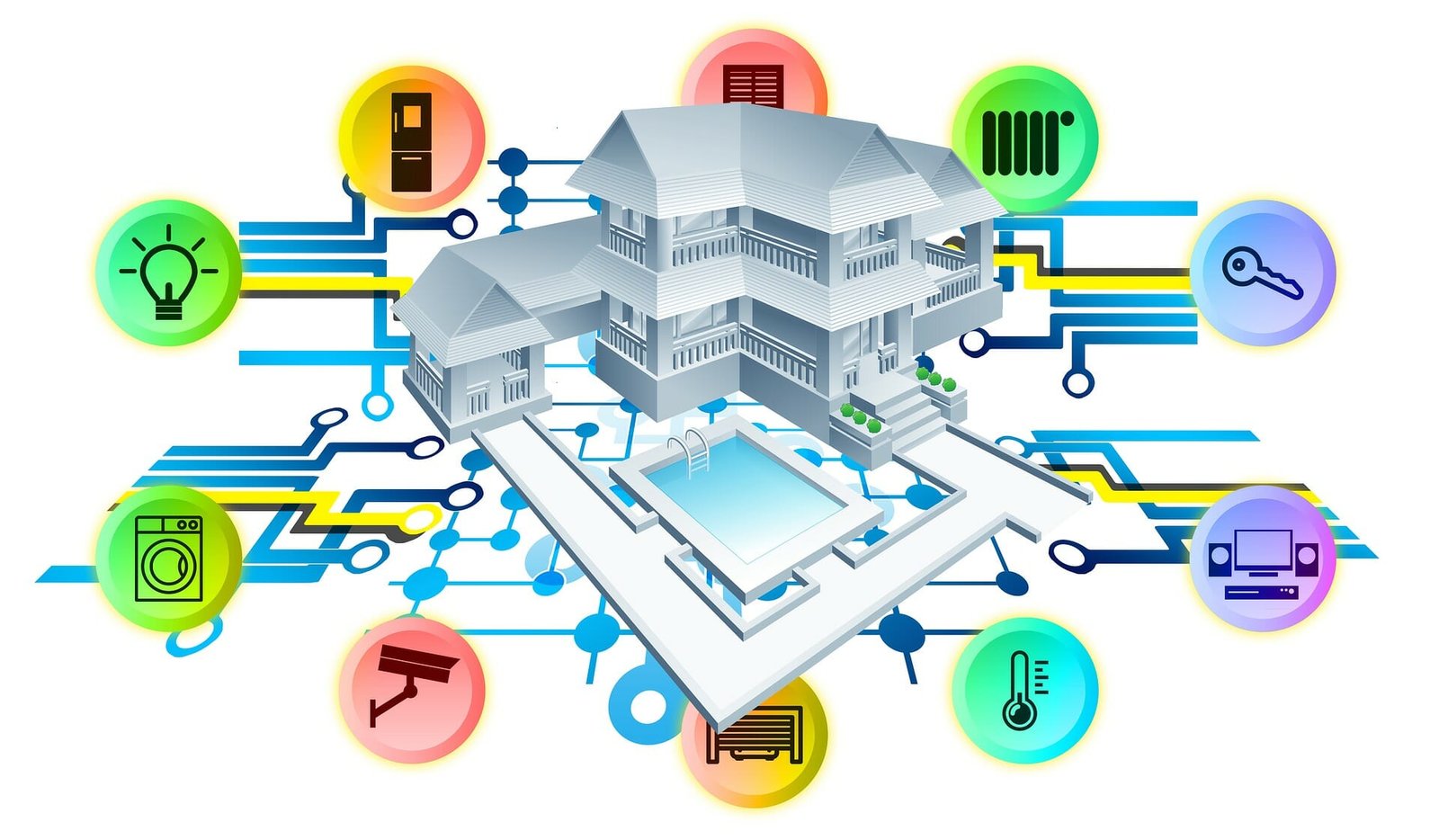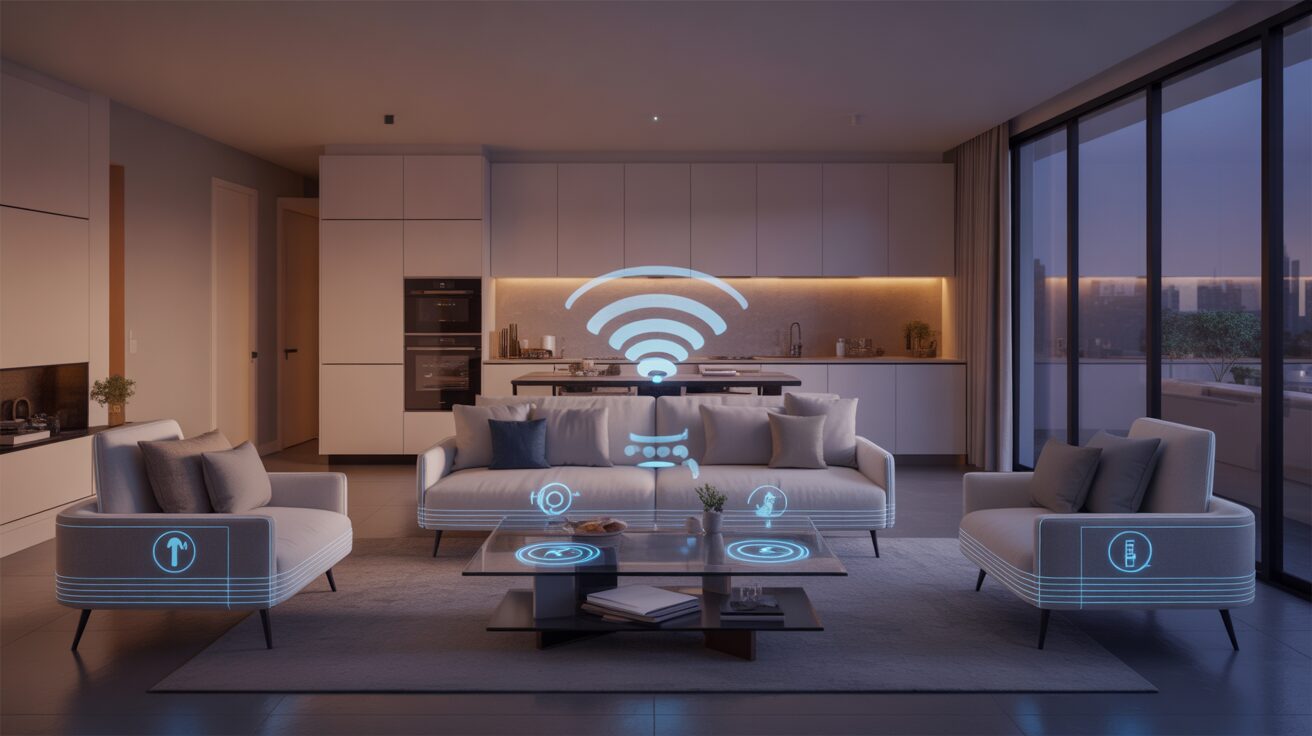
AI-Powered Smart Homes
Executive summary
The smart home is shifting from “command-and-control” automation (voice commands, simple routines) to AI-assisted living: systems that can interpret intent, understand context, and proactively help—especially in security, media control, troubleshooting, and multi-step routines.
Two forces are shaping this trend:
-
Generative AI in assistants (more natural language, multi-step requests, summarization, “do what I mean”)—now rolling out in mainstream ecosystems like Amazon Alexa+ and Google Home with Gemini.
-
Edge / on-device AI (faster response, improved privacy, reduced cloud dependency), increasingly emphasized across the industry.
At the same time, the market is learning that “smarter” can also mean “less reliable” if AI changes behavior in ways that break basic device control—so reliability, safety, and interoperability remain critical.
1) What “AI-powered smart home” means now
In 2025–2026, this trend is less about sci-fi and more about three practical capabilities:
A. Natural language control that’s more flexible
Instead of strict device names and rigid phrasing, AI assistants aim to handle requests like:
-
“Turn on the lights, but not the baby’s room.”
-
“Make the living room cozy for a movie.”
-
“Set the house for bedtime and remind me if the garage is open.”
This is the promise behind new assistant updates (e.g., Alexa+; Gemini for Home).
B. Context + memory (within user permissions)
Assistants are moving toward personalized help by using permitted signals (preferences, history, device states) to reduce “setup friction” and repeated instructions.
Google is explicitly positioning Gemini around deeper personalization and context (opt-in controls).
C. Intelligence moving closer to the home (edge AI)
A lot of “smart home intelligence” is shifting to local processing—especially for cameras, voice, and sensor interpretation—because it improves:
-
Latency (faster reaction)
-
Reliability (less dependent on internet)
-
Privacy (less data sent to cloud)
-
Cost (less cloud compute for every interaction)
2) The highest-impact AI use cases (what’s actually sticking)
A. Home security & safety (the clearest near-term winner)
AI adds value when it reduces noise and increases meaning:
-
“Person/package/vehicle” detection
-
Better event summaries and searching video history
-
Prioritizing alerts that matter
Google’s positioning for “Home Premium with Gemini” leans heavily into security camera intelligence and easier video search.
B. “Scenes” and routines that adapt (not just timers)
Traditional automations break because real life isn’t consistent. AI aims to improve routines by using sensor/context signals (presence, time, ambient light, etc.) to avoid brittle rules.
C. Smart home troubleshooting & support
A quietly important use case: AI assistants can help diagnose “why didn’t this routine run?” or “why is this device offline?”—reducing the biggest adoption barrier: maintenance fatigue.
D. Multimodal home hubs (screens + sensors)
Smart displays are becoming more “hub-like,” using sensors and local compute to better understand what’s happening in the room.
Recent Echo Show updates highlight on-device silicon and ambient sensing as a differentiator.
3) Enablers powering the trend
A. Edge AI + specialized chips
Industry tech signals increasingly emphasize on-device intelligence for speed, privacy, and resilience.
B. Assistant upgrades (GenAI layer)
-
Alexa+ is Amazon’s generative AI step-change for assistant capabilities (announced Feb 26, 2025).
-
Gemini for Home is Google’s push to rebuild the home assistant experience around Gemini, with staged rollouts including Canada starting Dec 18, 2025 (English).
C. Interoperability standards (so AI can control everything)
AI doesn’t help if devices don’t reliably work together. Matter is the key interoperability foundation—an IP-based protocol designed to unify smart home ecosystems.
4) The biggest friction: reliability vs. “smart”
A consistent theme in recent coverage: generative AI can make assistants more conversational but sometimes less dependable at basic tasks (like consistently turning on the correct light).
For the industry, this creates a practical product requirement:
Smart home AI must be “boringly reliable” on core controls (lights, locks, thermostats) while using AI for higher-level interpretation and help.
5) Privacy, security, and trust: the decisive battleground
AI-powered homes are trust-sensitive because they involve microphones, cameras, and presence data. The market response is trending toward:
-
More local processing (edge AI) to reduce data leaving the home
-
Opt-in personalization and controls over connected services (explicitly emphasized in Google’s approach)
-
Clearer product positioning around what is processed locally vs. in the cloud (still inconsistent across brands)
6) Business model shifts
AI assistants and advanced intelligence features are increasingly packaged as subscriptions or tiered plans, often bundling:
-
smarter assistant features
-
better camera/video intelligence
-
enhanced home monitoring features
Google positions “Home Premium with Gemini” as a paid plan starting around $10/month (pricing varies by region and bundles).
Amazon has positioned Alexa+ as a next-gen assistant experience (rollout/packaging details have varied by market and program stage).
7) Outlook: what to expect next
Likely winners
-
Security-first AI features (clear ROI for consumers)
-
Edge-first architectures (privacy + speed + reliability)
-
Matter-enabled ecosystems that reduce fragmentation
Likely near-term disappointments
-
“Do everything” assistants that are conversational but inconsistent
-
Over-automated homes that feel unpredictable (users disable “smart” features if they lose trust)
8) Practical recommendations (by stakeholder)
If you’re a consumer / buyer
-
Prioritize interoperability (Matter support) and reliability first.
-
Choose AI features that solve real pain (security alerts, camera search, routine simplification) rather than novelty.
If you’re a product leader / manufacturer
-
Treat core control (lights/locks/thermostats) as a deterministic system, and layer AI on top for intent and support.
-
Invest in edge AI where it improves trust and latency.
If you’re a retailer / channel seller
-
Merchandise AI smart home by outcome (sleep, safety, convenience, energy) rather than device type.
-
Reduce returns by being explicit: what requires subscriptions, what requires hubs, what works offline, what is Matter-compatible.